

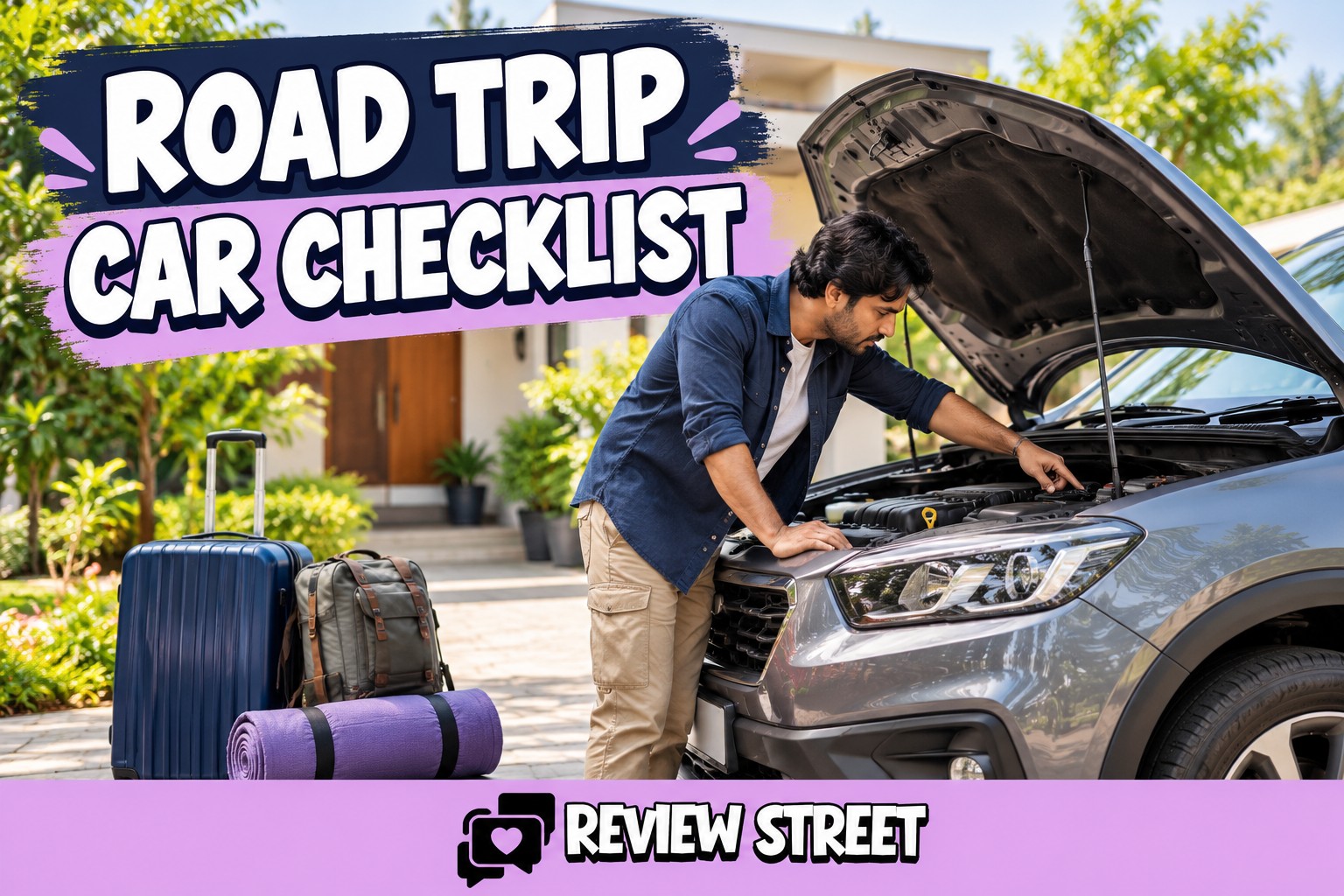
A smooth long drive starts with a prepared vehicle, realistic route and rested driver. Use this checklist before departure, leaving time to resolve problems rather than discovering them on the highway.
A car road trip checklist is most useful a few days before the journey, when there is still time to arrange a workshop visit or replace a missing essential. Checking everything at the fuel station on departure morning leaves little room for anything beyond a quick fix.
The following checks cover preparation rather than repairs. Your owner’s manual remains the authority for your vehicle, and unusual noises, leaks or warning lights deserve professional attention. Do not start a long journey with an unresolved safety concern simply because the car still moves.
1. Review service needs before the departure date
Check the service history and whether maintenance will fall due during the trip. Tell the workshop about the expected distance and any symptoms you have noticed, including difficult starting, vibration or changes in braking. A specific description is more useful than asking for a generic road-trip package.
Arrange the visit early enough to drive the car normally afterwards and notice unresolved problems. Keep invoices and assistance contacts accessible. Routine servicing reduces uncertainty, but it does not guarantee a trouble-free journey.
2. Check tyre pressure and visible condition
Use the manufacturer’s recommended pressures for your vehicle and load, usually found in the manual or vehicle placard. NHTSA advises against using the maximum figure on a tyre sidewall as the vehicle’s recommended inflation pressure. Check tyres cold as directed by the manufacturer.
Look for obvious cuts, bulges, embedded objects or uneven wear, and seek professional advice where anything looks wrong. Include the spare if fitted. If the vehicle uses a repair kit instead, check its condition and instructions; a kit will not resolve every type of damage.
3. Have braking and steering concerns assessed
Unusual pedal feel, pulling, grinding or persistent vibration should not be dismissed as something to monitor after reaching the destination. Have a qualified technician inspect the vehicle before departure. Avoid attempting unfamiliar brake or steering repairs using a travel checklist.
Pay attention during ordinary local driving before the trip. If a problem develops en route, stop safely and arrange assistance as appropriate. A schedule or hotel reservation is never a good reason to continue with a suspected safety fault.
4. Check fluids using the owner’s manual
Review the manual’s procedure for checking the fluids relevant to your car. The correct products and inspection methods differ between vehicles. Avoid mixing fluids or topping up simply because a container appears low without understanding the system.
Never open a hot pressurised cooling system. Recurring low levels, leaks or overheating require diagnosis rather than repeated top-ups. Electric vehicles have different maintenance needs; do not assume an engine-car checklist translates directly to an EV.
5. Test lights, wipers and visibility
Check headlights, indicators, brake lights and other exterior lights with help from another person where needed. Clean the windscreen and mirrors and check washer operation. Wiper blades that smear or skip deserve attention before rain makes visibility difficult.
Keep luggage and accessories away from the driver’s sight lines. Set navigation and charging cables so they do not interfere with controls. A clear view and an uncluttered driving area matter more than fitting another gadget to the dashboard.
6. Verify documents and assistance details
Check that your driving and vehicle documents are valid and appropriate for the route. Requirements can vary with the jurisdiction, vehicle and purpose of travel; use official sources for any cross-border journey or unusual route.
Save insurer and roadside-assistance contacts offline and check what the cover actually includes. If several people will drive, verify that each is eligible under the relevant arrangements. Keep essential documents accessible without leaving personal information exposed in the car.
7. Plan fuel or charging stops realistically
Build the route around usable stops rather than the vehicle’s most optimistic range estimate. Traffic, terrain, weather, load and driving conditions can affect consumption. Keep an appropriate buffer and avoid making the entire plan depend on one late stop.
For an EV, confirm connector compatibility, access hours and the payment process, and identify alternatives. A charger appearing on a map does not establish that it will be available when you arrive. Download route information for areas with unreliable mobile coverage.
8. Secure luggage and pack useful essentials
Keep heavier items low and secure, follow load limits and avoid loose objects that could move during sudden braking. Do not obstruct the rear view or place bags where they affect pedal operation. Make frequently needed items accessible without unpacking everything at a roadside stop.
Carry essentials suited to the route, such as drinking water, a torch, charging equipment and the vehicle’s supplied emergency tools. For ideas rather than an automatic shopping list, see ReviewStreet’s travel gadgets guide.
9. Agree on rest and driver responsibilities
Set a realistic arrival time with room for breaks, traffic and meals. Begin rested, avoid alcohol or other impairment and stop if the driver becomes sleepy. Music, open windows and caffeine should not be treated as substitutes for adequate rest.
Passengers can manage navigation and messages so the driver can concentrate. For group expectations and shared costs, adapt the principles in ReviewStreet’s trip-planning guide for friends. If the plan no longer feels safe, change it.
10. Make a final walk-around before leaving
Check for obvious damage or leaks, confirm that luggage and doors are secure, and make sure everyone has an appropriate seat and restraint. Review weather and route disruptions through reliable sources. Never leave children or pets alone in a parked vehicle.
Set the first navigation destination before moving. If the car displays an unfamiliar warning, read the manual and seek assistance as needed. Keep transport alternatives in mind; ReviewStreet’s coverage of intercity round trips is a reminder that self-driving is not the only way to organise a journey.
Before-you-go checklist
- Vehicle concerns assessed and maintenance reviewed.
- Tyres, lights, wipers and relevant fluids checked.
- Documents and assistance information accessible.
- Luggage secured and fuel or charging alternatives mapped.
- Rest breaks and driver responsibilities agreed.
Who should handle each preparation task?
| Task | Approach |
|---|---|
| Route, documents and luggage | Organise before departure and recheck on the day |
| Tyre pressures and basic checks | Follow the vehicle manual or ask a competent professional |
| Braking, steering or recurring warning concerns | Arrange qualified inspection before the journey |
| Unfamiliar roadside fault | Prioritise a safe stop and appropriate assistance |
FAQs about preparing a car for a road trip
When should I check my car before a long drive?
Start several days beforehand so you can arrange repairs or replacements. Do a brief final check on departure day as well.
Should tyre pressure match the number on the sidewall?
Use the vehicle manufacturer’s recommendation for the actual load. The maximum pressure marked on a tyre is not automatically the correct operating pressure.
Can I travel with a dashboard warning light?
Warnings have different meanings. Consult the manual and obtain qualified advice; do not assume a long journey is safe because the car seems to drive normally.
Does an EV need the same checks?
Many checks, including tyres, visibility and restraints, still apply. Maintenance and charging preparation differ, so follow the EV manufacturer’s guidance.
Reference and practical limits
NHTSA’s road-trip preparation guidance includes checks for tyres, fluids, lights and journey planning. Its guidance is a general safety reference, not Indian legal advice. Follow local rules and your vehicle manual; this article does not replace a professional inspection.