

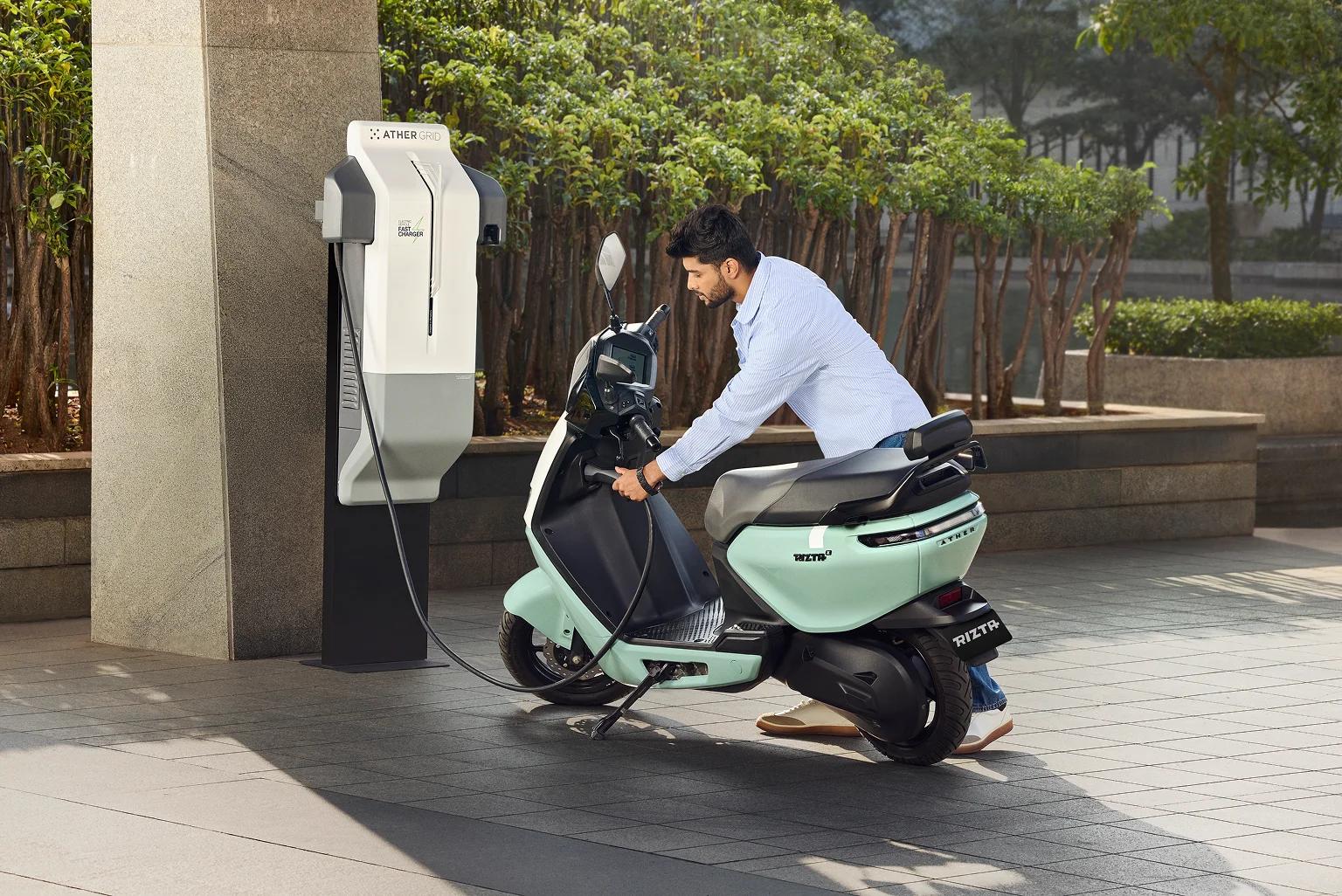
Electric scooters are becoming an increasingly visible part of India’s urban transportation landscape.
For commuters seeking alternatives to petrol-powered two-wheelers, electric mobility offers the possibility of lower day-to-day energy costs, quieter operation and reduced tailpipe emissions.
Manufacturers have introduced electric scooters with different battery capacities, riding modes, connected features and charging arrangements.
However, the growing range of choices has made the purchasing decision more complicated.
Consumers must consider much more than the advertised riding range.
Battery durability, charging access, warranty coverage, service availability and the overall cost of ownership can determine whether an electric scooter delivers genuine value.
A suitable electric scooter should match the rider’s daily travel requirements and practical charging circumstances.
Why electric scooters are attracting attention
Electric mobility is supported by advances in battery technology, growing product availability and consumer interest in alternative transportation.
A Deloitte consumer study covering India in 2026 indicated that interest in electric vehicles continued to show resilience even as broader vehicle purchase intentions softened.
This does not mean that electric scooters are the ideal solution for every rider.
Consumers who travel long distances without dependable charging access may face challenges.
Others may find that their daily commuting patterns are well suited to electric two-wheelers.
The correct decision requires a realistic assessment of usage.
Understand your daily travel distance
Before comparing models, calculate the average distance travelled each day.
Include commuting, shopping, school runs and occasional additional journeys.
For example, someone travelling 12 kilometres each way to work has a daily commute of approximately 24 kilometres.
Additional errands may increase the total.
A scooter should provide sufficient practical range without requiring frequent charging under normal conditions.
It is sensible to maintain a range reserve rather than planning to use the entire advertised battery capacity.
Claimed range versus real-world range
One of the most important electric scooter specifications is riding range.
Manufacturers may publish range figures based on standardised testing or specific operating conditions.
Actual performance can vary with riding speed, traffic, terrain, load, temperature, tyre pressure and riding mode.
Aggressive acceleration and sustained high speeds may increase energy consumption.
Carrying a passenger or travelling uphill can also influence range.
Buyers should examine independent tests conducted under conditions similar to their own commuting patterns.
A claimed range figure should not be treated as a guaranteed daily result.
Battery capacity explained
Electric scooter battery capacity is commonly expressed in kilowatt-hours.
A larger battery generally stores more energy, although vehicle efficiency also affects range.
Battery size influences vehicle weight, charging time and purchase price.
A larger battery is not automatically the best option.
A commuter travelling relatively short distances may not need to pay substantially more for capacity that will rarely be used.
The correct balance depends on daily travel, charging frequency and long-term ownership expectations.
How much does electric scooter charging cost?
Charging cost can be estimated using battery capacity, electricity tariffs and charging efficiency.
Consider an illustrative scooter with a 3 kWh battery.
If electricity costs ₹8 per kWh, the theoretical energy cost of storing 3 kWh would be ₹24.
However, charging losses mean that the electricity drawn from the supply may exceed the energy stored in the battery.
For example, assuming 3.3 kWh is drawn from the wall, the cost would be approximately ₹26.40.
This is only an illustration.
Actual charging costs depend on the tariff, battery state, charging efficiency and charging arrangement.
Public charging services may have different pricing structures.
Compare electric and petrol running costs
A useful comparison should examine energy or fuel costs per kilometre.
Suppose an electric scooter consumes 3.3 kWh from the wall to travel 100 kilometres.
At ₹8 per kWh, the electricity cost would be ₹26.40 per 100 kilometres, or approximately ₹0.26 per kilometre.
For comparison, consider a petrol scooter delivering 45 kilometres per litre with petrol priced at an illustrative ₹100 per litre.
The fuel cost would be approximately ₹2.22 per kilometre.
These figures are hypothetical, not current market quotations or guaranteed performance.
The comparison excludes maintenance, battery replacement, insurance, depreciation and financing.
Nevertheless, it demonstrates why electric scooters can offer attractive energy-cost economics for suitable commuting patterns.
The importance of home charging
Reliable charging access is a major factor in electric scooter ownership.
Consumers living in independent houses may find it easier to arrange charging than those living in apartment complexes with limited parking infrastructure.
Before purchasing, confirm whether the scooter can be charged safely at the intended location.
Check electrical capacity, installation requirements and manufacturer guidance.
Avoid improvised wiring arrangements.
Charging equipment should be installed and used according to applicable safety standards and manufacturer instructions.
Charging time and convenience
Charging time depends on battery capacity, charger power, charging technology and battery-management systems.
Some models offer faster charging options.
However, fast charging availability and compatibility vary.
Consumers should evaluate whether overnight charging meets their requirements.
For many daily commuters, predictable charging access may be more important than the fastest advertised charging speed.
Battery warranty: Read the conditions carefully
The battery is among the most expensive components of an electric scooter.
Consequently, warranty coverage deserves close attention.
Manufacturers may specify warranty duration, kilometre limits, capacity-retention conditions and exclusions.
A long warranty period does not necessarily mean every battery-related problem will be covered without conditions.
Buyers should examine the exact terms.
Questions worth asking include whether the warranty covers manufacturing defects, what level of battery degradation is considered acceptable and how claims are processed.
Consumers should also verify whether the warranty is transferable when the scooter is sold.
Safety considerations
Electric scooters require the same responsible riding behaviour as other two-wheelers.
A certified helmet, appropriate protective equipment and adherence to traffic rules remain essential.
Vehicle-specific considerations include braking performance, tyre quality, lighting and handling stability.
Battery and electrical safety are equally important.
Avoid using damaged charging equipment.
Do not modify the battery system or install unauthorised components.
Follow manufacturer guidance regarding charging conditions and maintenance.
Any unusual overheating, swelling, smoke or electrical malfunction should be treated seriously.
Stop using the affected equipment and seek qualified assistance.
Service centres and spare parts
A scooter’s ownership experience depends heavily on service support.
Before purchasing, identify authorised service centres in the local area.
Ask about typical maintenance schedules and spare-part availability.
Digital service-booking features may improve convenience, but physical repair capacity remains essential.
Consumers should examine feedback about warranty claims, repair delays and customer support.
A technologically advanced scooter can become inconvenient if dependable service is unavailable.
Should you buy a scooter with a removable battery?
Removable batteries can offer charging flexibility for certain users.
For example, a rider without a convenient parking-area charging point may benefit from a battery that can be charged separately, provided the design and building rules permit it.
However, removable batteries can be heavy and require careful handling.
Consumers should assess weight, security, charging arrangements and manufacturer instructions.
A removable battery is not automatically superior to a fixed battery.
The decision depends on the scooter design and the rider’s circumstances.
Understanding connected features
Modern electric scooters may offer smartphone applications, navigation, ride statistics, theft alerts and remote diagnostics.
These features can improve convenience.
However, consumers should consider data privacy, software reliability and long-term support.
Ask whether essential vehicle functions remain usable without a smartphone connection or subscription.
Connected features should complement dependable transportation rather than become the primary reason for purchasing.
Electric scooter financing and insurance
Many buyers consider financing to reduce the initial payment.
However, monthly instalments should be evaluated alongside interest charges, processing fees and total repayment obligations.
A lower monthly instalment does not necessarily mean a cheaper purchase.
Insurance requirements and premiums depend on the vehicle and applicable regulations.
Consumers should compare policy coverage, exclusions and claim procedures.
Battery-related coverage may require particular attention.
Resale value and depreciation
Electric scooter resale values depend on brand reputation, battery condition, service history, demand and product support.
Battery health can influence buyer confidence.
Keeping maintenance records and following recommended charging practices may support resale prospects.
However, depreciation is difficult to predict.
Consumers should not assume that an electric scooter will retain a particular percentage of its purchase price.
Checklist before purchasing
A prospective buyer should confirm the real-world range, charging arrangements, battery warranty, service availability, safety equipment, insurance costs and financing terms.
A test ride is particularly valuable.
It allows the rider to assess seating comfort, handling, braking, acceleration and manoeuvrability.
The scooter should feel manageable during ordinary urban riding conditions.
For additional coverage of electric mobility, manufacturing and emerging business opportunities, visit SMEStreet’s industry news and analysis.
Frequently asked questions
Are electric scooters cheaper to run than petrol scooters?
Electricity costs per kilometre can be lower, but the total ownership comparison must include purchase price, maintenance, insurance and depreciation.
How long does an electric scooter battery last?
Battery lifespan varies by chemistry, design, usage, charging habits and operating conditions.
Can electric scooters be charged at home?
Many models support home charging, subject to appropriate electrical arrangements and manufacturer instructions.
Is the advertised range accurate?
Advertised range is usually based on defined testing conditions and may differ from everyday performance.
Should I buy an electric scooter in 2026?
It may be a practical option if your travel distances, charging access, budget and service requirements align with the vehicle’s capabilities.
Conclusion
Electric scooters can provide a practical alternative for many Indian commuters.
Their potential advantages include lower energy costs, quieter operation and convenient urban mobility.
However, the best purchasing decision depends on understanding the complete ownership experience.
Consumers should prioritise dependable range, safe charging, strong warranty coverage and accessible service support.
The right electric scooter is not necessarily the one with the highest claimed range or the largest number of connected features.
It is the one that delivers reliable, economical and safe transportation for the rider’s actual requirements.